
Affiliate Disclosure: Some links on this page are affiliate links. If you purchase tools, machinery, or pattern resources through these links, we may earn a small commission at no additional cost to you. All product recommendations are selected independently based on durability, ease of use, and beginner ergonomics.
Walking down the craft store aisle as a beginner can be overwhelming. Between specialty presser feet, laser-guided cutting mats, and $200 specialty rulers, it feels like you need an entire industrial workshop just to stitch a straight seam.
The reality is that 80% of beginner sewing frustration has nothing to do with expensive equipment—it comes from using the wrong needle, poor thread, or unguided pattern instructions. You do not need a multi-thousand-dollar studio to sew clean, boutique-quality garments.
This guide breaks down the exact starter toolkit you need, separates high-value essentials from marketing gimmicks, and shows you how to set up your sewing space on a budget.
1. The Beginner Tool Budget Audit: Must-Have vs. Skip
Before spending money on fancy gadgets, prioritize your shopping basket using this three-tier breakdown:
| Tool Name | Status | Why You Need It | Target Recommendation |
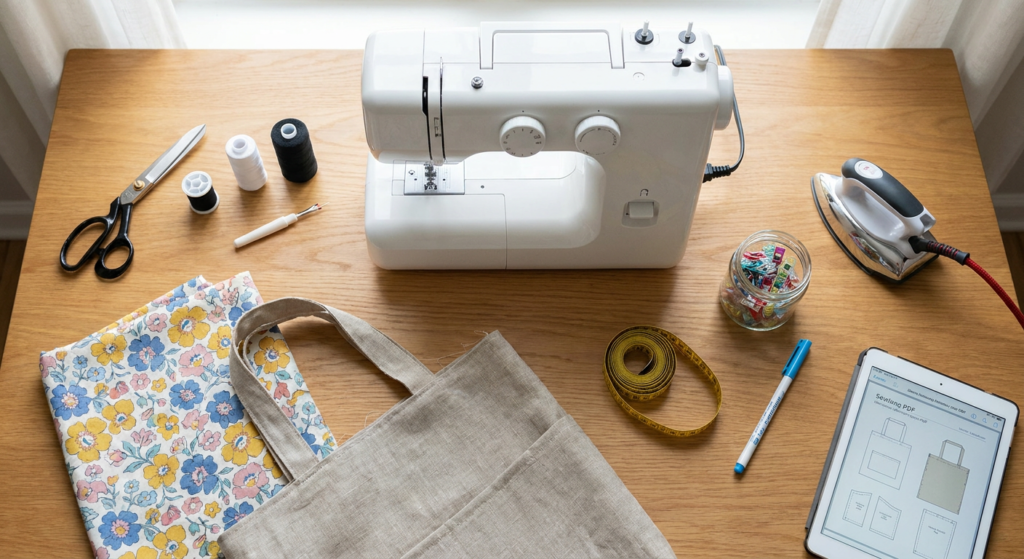
| Dedicated Fabric Shears (8-Inch) | Must-Have | Paper scissors crush and fray fabric fibers, leading to jagged cuts. | Kai 5000 Series or Gingher 8-Inch Dressmaker Shears |
| Heat-Resistant Glass-Head Pins | Must-Have | Plastic pin heads melt directly onto your fabric when pressed with a hot iron. | Dritz Glass-Head Pins (Size 20 or 24) |
| Ergonomic Seam Ripper | Must-Have | Unpicking stitches is a normal part of drafting. A dull ripper punches holes in fabric. | Clover Ergonomic Seam Ripper |
| Universal Machine Needles (80/12) | Must-Have | Dull or incorrect needles cause skipped stitches, thread nests, and fabric damage. | Schmetz Universal Variety Pack |
| All-Purpose Polyester Thread | Must-Have | Cheap, bargain-bin thread sheds lint and breaks under machine tension. | Gutermann Sew-All Polyester (White, Black, Grey) |
| Flexible 60-Inch Measuring Tape | Must-Have | Essential for tracking body measurements and pattern ease. | Soft fiberglass measuring tape |
| Clear Acrylic Ruler & Chalk Liner | Must-Have | For drawing straight cutting lines, grainlines, and transferring dart marks. | Chaco Liner or Clover Triangle Tailor’s Chalk |
| Standard Steam Iron & Board | Must-Have | Pressing sets each seam flat; unpressed garments look puckered and homemade. | Any reliable steam iron with variable heat settings |
| Rotary Cutter & Self-Healing Mat | Nice-to-Have | Speeds up straight cutting and protects table surfaces. | Olfa 45mm Rotary Cutter + 18×24″ Mat |
| Sewing Clips (Wonder Clips) | Nice-to-Have | Holds thick layers or vinyl without puncturing needle holes. | Clover Wonder Clips |
| Overlocker / Serger | Skip for Now | Standard machines finish edges cleanly using zigzag stitches or French seams. | Skip until you sew advanced apparel. |
| Specialty Presser Feet Assortments | Skip for Now | 30-piece accessory boxes contain feet you will likely never use. | Use the standard zigzag foot included with your machine. |
2. Choosing Your First Sewing Machine (Features vs. Gimmicks)
You do not need a computerized machine with 200 decorative stitches. Look for mechanical reliability and sturdy internal construction:
- Heavy-Duty Internal Metal Frame: Prevents the machine from vibrating or skipping stitches when sewing thick seams.
- Adjustable Stitch Length and Width: Gives you complete control over straight seam density (2.5mm standard) and zigzag finishes.
- Drop-In Top Bobbin with Clear Cover: Lets you monitor remaining lower thread easily to prevent unexpected runouts.
- Free-Arm Capability: Essential for sliding pant hems, sleeve cuffs, and tote bags around the needle plate.
If you are sourcing open-source templates or digital downloads to practice your machine stitches, start with our free sewing patterns online guide
to find beginner-friendly project templates.
3. Fabric & Thread Selection: Stop Fighting Your Materials
Fabric choice determines half of your early sewing success. Slippery or stretchy fabrics cause tension headaches for novices:
- 🟢 Green Light Fabrics (Start Here): Medium-weight linen (150–200 GSM), quilting cotton, and cotton lawn. These hold their shape on the cutting table and press crisp, flat seams instantly.
- 🔴 Red Light Fabrics (Avoid Early): Rayon challis, silk, satin, and single-jersey stretch knits. These shift easily on the cutting mat and require specialized stabilizer or Microtex needles.
When preparing to assemble digital templates for these fabrics, review our step-by-step walkthrough on tips for printing PDF patterns
to calibrate your printer scale properly.
4. The Hidden Trap of Cryptic Patterns (And the Guided Solution)
Once your workspace and tools are set up, the biggest roadblock beginners encounter is “cut-anxiety”—the fear of ruining $30/yard fabric due to cryptic, confusing commercial pattern instructions. Traditional tissue pattern envelopes often skip critical steps and lack clear visual schematics.
🧵 Upgrade to Guided, Beginner-Friendly Digital Patterns
If you want to bypass confusing pattern shorthand and build confidence right away, explore the Sewing Pattern Secrets Digital Platform.
- 150+ Structured Starter Patterns: From elastic lounge pants to stylish tops and home accessories.
- Step-by-Step Multi-Angle Schematics: Detailed visual blueprints that show you exactly where each seam goes.
- Complete Material & Cutting Lists: Exact fabric yardage, GSM weights, and notion recommendations for every project.
- Embedded Video Walkthroughs: Full video tutorials guiding you from raw fabric cut to finished hem.
If you want to explore the best initial projects to tackle first with this setup, review our curated guide on the best sewing patterns for complete beginners
.
5. Frequently Asked Questions
What are the absolute minimum tools I need to start?
At minimum, you need a basic mechanical sewing machine, size 80/12 universal needles, quality polyester thread (e.g., Gutermann), 8-inch fabric shears, glass-head pins, a seam ripper, a flexible measuring tape, and an iron.
Why are my stitches bird-nesting into a tangled mess under the fabric?
Thread nests on the underside of fabric are almost always caused by upper threading mistakes, not the bobbin. Raise your presser foot all the way up to open the tension disks, unthread the upper spool completely, and rethread through the take-up lever.
Do I need to buy an overlocker (serger) right away?
No. Standard sewing machines finish raw woven edges cleanly using a simple zigzag stitch, pinking shears, or clean French seams.
How often should I change my sewing machine needle?
Change your needle every 6 to 8 hours of continuous sewing time, or at the start of every major garment project. Dull needles cause skipped stitches, snag fine threads, and damage fabrics.
Printable Beginner Sewing Essentials Checklist
Keep this checklist handy when assembling your starter basket:
- [ ] Mechanical sewing machine with straight and zigzag stitches
- [ ] 8-inch dedicated fabric shears (never used on paper)
- [ ] Quality polyester all-purpose thread (neutral colors)
- [ ] Universal machine needles (Size 80/12 or 90/14)
- [ ] Heat-resistant glass-head sewing pins
- [ ] Ergonomic seam ripper
- [ ] Flexible 60-inch measuring tape
- [ ] Tailor’s chalk or water-soluble marking pencil
- [ ] Clear acrylic grid ruler
- [ ] Household steam iron and pressing board